
Sustainable skincare tips: 10 ways to build a routine that is better for your skin and the planet
Sustainable skincare does not mean sacrificing results. Here are 10 practical tips to reduce waste, choose better products, and build a routine you can feel good about.
Published: April 4, 2026
The beauty industry produces over 120 billion units of packaging every year, and most of it ends up in landfills. Meanwhile, ingredients sourced without regard for the environment contribute to deforestation, water pollution, and biodiversity loss. The good news is that building a more sustainable skincare routine doesn't require giving up effective products or spending twice as much. It's about making smarter choices — fewer products, better packaging, and ingredients that work for your skin without wrecking everything else. Here are 10 practical ways to get there.
Table of Contents
- 1. Simplify your routine
- 2. Choose refillable and recyclable packaging
- 3. Switch to bar cleansers and solid products
- 4. Use reusable cotton rounds and cloths
- 5. Read ingredient lists, not just marketing claims
- 6. Support brands with transparent sourcing
- 7. Finish what you have before buying more
- 8. Look for concentrated formulas
- 9. Skip the single-use sheet masks
- 10. Store products properly to extend shelf life
- Build a routine that works and lasts
- Frequently asked questions
Key Takeaways
| Tip | Impact |
|---|---|
| Simplify your routine | Fewer products means less packaging, less waste, and often better results. |
| Choose refillable packaging | Refill systems can reduce packaging waste by up to 70%. |
| Finish before buying | The most sustainable product is the one you actually use up. |
| Read ingredient lists | "Natural" and "clean" labels don't guarantee sustainability — ingredients matter more than marketing. |
1. Simplify your routine
The most sustainable thing you can do for your skincare is use fewer products. Every bottle, tube, and jar represents raw materials, manufacturing energy, shipping emissions, and packaging waste. A 10-step routine generates roughly three times the waste of a focused 3-step one.
This isn't just an environmental argument — it's a skincare one too. Dermatologists consistently recommend simpler routines because they reduce the risk of irritation, ingredient conflicts, and barrier damage. A gentle cleanser, a good moisturizer, and sunscreen cover the essentials. Add one or two targeted treatments if you need them, and you're done.
Before adding anything new to your shelf, ask yourself: does this solve a specific problem my current products don't? If the answer is no, you don't need it.
2. Choose refillable and recyclable packaging

Packaging is the biggest waste problem in skincare. Most products come in multi-layered containers that combine plastics, metals, and pumps in ways that make recycling nearly impossible. Even containers labeled "recyclable" often aren't accepted by local recycling programs.
Look for brands that offer refill systems — you buy the container once and refill it with pouches or pods that use significantly less material. Glass containers are genuinely recyclable and can be reused at home. Aluminum is infinitely recyclable and increasingly common for skincare packaging.
A few things to watch for:
- Pumps and droppers are usually not recyclable — remove them before recycling the bottle
- Black plastic is invisible to most recycling sorting machines and gets sent to landfill
- Tubes with mixed materials (plastic body, metal crimp) are almost never recyclable
- TerraCycle and brand take-back programs can handle packaging that curbside recycling can't
3. Switch to bar cleansers and solid products
Solid skincare products — bar cleansers, shampoo bars, solid moisturizer sticks — eliminate the need for plastic bottles entirely. They also tend to be more concentrated, last longer, and require less water in manufacturing and shipping (liquid products are mostly water by weight).
The old concern about bar cleansers being too harsh is outdated. Modern syndet (synthetic detergent) bars are formulated at skin-friendly pH levels and can be just as gentle as liquid cleansers. Look for bars with a pH between 4.5 and 6, and avoid traditional soap bars that sit at pH 9 or higher.
Solid products also travel better — no liquid restrictions, no leaking in your bag, and no bulky bottles taking up space.
4. Use reusable cotton rounds and cloths
Disposable cotton pads are one of those small daily habits that add up fast. The average person who uses toner or micellar water goes through hundreds of cotton rounds per year. They're single-use, often bleached, and not compostable if they've absorbed skincare products.
Reusable cotton rounds made from bamboo, organic cotton, or microfiber work just as well and last for years with proper washing. Toss them in a mesh laundry bag and wash with your regular load. A set of 10 to 15 rounds is enough to rotate through a week before washing.
Muslin cloths and microfiber face cloths are also great for cleansing — they provide gentle physical exfoliation while removing cleanser and makeup without disposable wipes.
5. Read ingredient lists, not just marketing claims
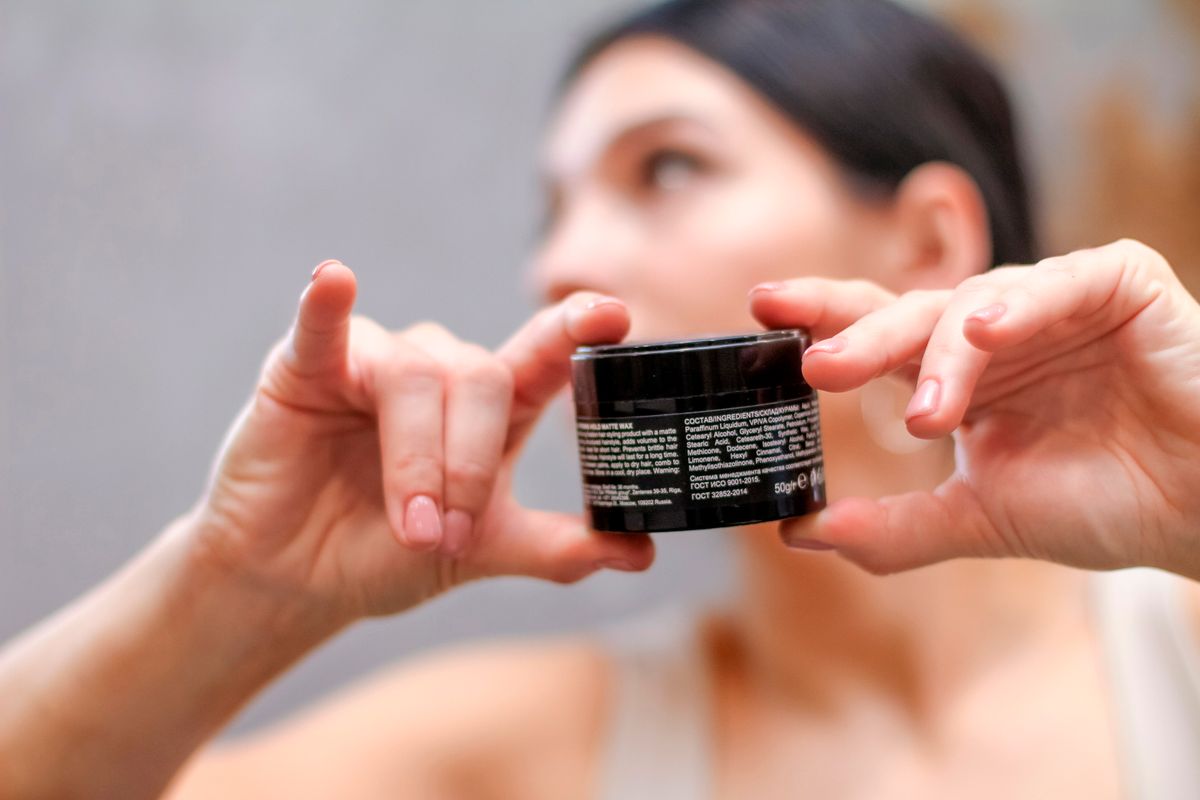
Terms like "natural," "clean," "green," and "eco-friendly" are not regulated in the beauty industry. Any brand can slap them on a label without meeting any specific standard. A product can be marketed as "natural" while containing synthetic fragrances, microplastics, or ingredients sourced through environmentally destructive practices.
What actually matters is the ingredient list. Look for:
- Short, recognizable ingredient lists — fewer ingredients generally means less processing
- Certifications that have real standards behind them: COSMOS, Ecocert, Leaping Bunny, B Corp
- Absence of microplastics (listed as polyethylene, polypropylene, or nylon on labels)
- Sustainably sourced palm oil (RSPO certified) or palm-oil-free formulas
Don't fall for "free from" marketing either. A product being "free from parabens" doesn't make it sustainable. It just means the brand knows that phrase sells. Focus on what's in the product, not what's been left out for marketing purposes.
6. Support brands with transparent sourcing
The most sustainable ingredient in the world doesn't matter if it was harvested in a way that destroyed an ecosystem to get it. Shea butter, argan oil, coconut oil, and palm oil are all common skincare ingredients with significant environmental and social supply chain concerns.
Brands that take sustainability seriously will tell you where their ingredients come from and how they're sourced. Look for companies that publish supply chain information, work with fair-trade cooperatives, or hold third-party certifications for ethical sourcing.
If a brand's sustainability page is nothing but vague promises and stock photos of leaves, that's a red flag. Transparency isn't just a nice-to-have — it's the baseline for any brand claiming to be sustainable.
7. Finish what you have before buying more
This is the least glamorous tip on the list and probably the most impactful. The beauty industry thrives on convincing you that the next product will be the one that changes everything. The result is bathroom shelves full of half-used bottles that eventually expire and get thrown away.
The most sustainable product is the one you actually use up. Before buying something new, finish what you have. If a product isn't working for you, repurpose it — a face moisturizer that's too heavy for your face might work fine on your hands or body. A cleanser that's too stripping for daily use might work as a weekly deep clean.
The greenest skincare product is the one you already own and actually finish.
If you genuinely can't use a product, check if your local Buy Nothing group or a friend wants it. Throwing away a full bottle of product wastes everything that went into making it.
8. Look for concentrated formulas
Most liquid skincare products are 60-80% water. You're paying to ship water, store water, and package water. Concentrated formulas — serums, balms, oils, and waterless products — deliver more active ingredients per drop and require less packaging per use.
Concentrated products also tend to last longer. A 30ml serum with a high concentration of actives can outperform a 200ml lotion with the same ingredient diluted to a fraction of the strength. You use less per application, the bottle lasts longer, and you generate less waste over time.
This doesn't mean every product needs to be waterless. But when you have the choice between a watered-down formula in a big bottle and a concentrated one in a small bottle, the smaller one is usually the smarter pick for both your skin and the environment.
9. Skip the single-use sheet masks
Sheet masks are one of the worst offenders in skincare waste. Each one is a single-use product wrapped in individual plastic packaging, often containing a synthetic fabric that isn't biodegradable. The serum left in the packet usually gets thrown away too. For 15 minutes of use, that's a lot of waste.
Better alternatives:
- Apply a thick layer of your regular serum or moisturizer as a "mask" — same hydration boost, zero waste
- Use a wash-off mask in a jar or tube that lasts for dozens of applications
- Try a reusable silicone mask cover that holds your serum against your skin without a disposable sheet
- DIY masks with ingredients like honey, yogurt, or oatmeal work surprisingly well for hydration and soothing
If you love the ritual of masking, you don't have to give it up. You just need to find a version that doesn't generate a trash bag's worth of packaging every month.
10. Store products properly to extend shelf life

Products that go bad before you finish them are pure waste. Proper storage can significantly extend the life of your skincare and reduce how often you need to replace things.
Basic storage rules:
- Keep products out of direct sunlight — UV degrades active ingredients like vitamin C and retinol
- Store in a cool, dry place — the bathroom is actually one of the worst spots because of heat and humidity from showers
- Close lids tightly after every use — air exposure oxidizes products and introduces bacteria
- Use spatulas instead of fingers for jar products — this reduces contamination and extends shelf life
- Check the PAO (period after opening) symbol on packaging — the number inside the open jar icon tells you how many months the product is good for after opening
Vitamin C serums, retinol products, and anything with active enzymes are especially sensitive to light and air. If your vitamin C serum has turned dark orange or brown, it's oxidized and no longer effective. Proper storage prevents this.
Build a routine that works and lasts
Sustainable skincare starts with finding products that actually work for your skin — because the fastest way to generate waste is buying things that don't deliver and end up in the trash. At Living2Slay, you'll find honest, experience-backed skincare reviews that help you make smarter choices the first time. Less trial and error means less waste, less money spent, and a routine you can stick with. Check out the reviews and find what works for you.
Frequently asked questions
Is sustainable skincare more expensive?
Not necessarily. Simplifying your routine to fewer, better products often costs less than a cabinet full of mediocre ones. Refillable products have a higher upfront cost but save money over time. And drugstore brands are increasingly offering sustainable packaging options at accessible price points.
Are "natural" ingredients always more sustainable?
No. Some natural ingredients like palm oil and certain essential oils have significant environmental footprints due to farming practices and land use. Meanwhile, some lab-synthesized ingredients are more sustainable because they don't require agricultural land, water, or harvesting from wild ecosystems. Sustainability depends on sourcing and production, not whether something is natural or synthetic.
How do I know if a brand is actually sustainable?
Look for third-party certifications (B Corp, COSMOS, Ecocert, Leaping Bunny) rather than self-applied labels. Check if the brand publishes specific sustainability goals and progress reports. Vague claims like "eco-friendly" or "green" without data to back them up are usually greenwashing.
Can I recycle skincare packaging?
Some of it. Glass and aluminum are widely recyclable. Most plastic bottles (types 1 and 2) are accepted curbside. But pumps, droppers, mixed-material tubes, and black plastic usually aren't. Remove pumps before recycling bottles, and check brand take-back programs or TerraCycle for items your local recycling won't accept.
What's the single biggest change I can make?
Use fewer products and finish what you buy. It sounds simple, but it addresses the root of the problem — overconsumption. Every product you don't buy is packaging that doesn't get manufactured, shipped, and thrown away.