
How to keep your skin healthy before & after spray tanning: A complete guide
Get a flawless, long-lasting spray tan while keeping your skin healthy. This guide covers everything from pre-tan prep to post-tan care for the best results.
Published: April 1, 2026
Spray tanning gives you that sun-kissed glow without UV damage, but the process itself can be drying and potentially irritating if you don't prep and care for your skin properly. The difference between a patchy, short-lived tan and a smooth, week-long glow comes down to how you treat your skin before and after application. This guide walks you through exactly what to do at each stage to keep your skin healthy while getting the best possible results from your spray tan.
How spray tanning works
Spray tans work by applying a tanning solution that reacts with amino acids in your skin's outer layer to create a temporary brown color. The solution only affects dead skin cells at the surface—which is why your tan fades as those cells naturally shed over 5-10 days.
This explains why prep and aftercare matter: uneven or flaky skin creates patchy color, oils and lotions block the solution from reaching your skin, and anything that speeds up cell turnover (exfoliation, harsh products, dryness) makes your tan fade faster. The steps below work with this process to give you even, long-lasting color.
Table of Contents
- How spray tanning works
- Before your spray tan
- During application
- Immediately after your spray tan
- The first shower after tanning
- Maintaining your tan
- What to avoid while tanned
- When your tan starts fading
- Keeping skin healthy long-term
- Frequently asked questions
Key Takeaways
| Timing | Key Action | Why It Matters |
|---|---|---|
| 24-48 hours before | Exfoliate thoroughly | Creates an even surface for tan application and removes dead skin that would flake off early |
| Day of tan | No moisturizers, oils, or deodorant | These create barriers that prevent the tanning solution from binding to skin properly |
| 8-12 hours after | First shower with lukewarm water | Rinses bronzer while allowing the tan to fully develop |
| Throughout tan life | Moisturize twice daily | Hydrated skin holds color longer and fades more evenly |
Before your spray tan
Preparation is everything. Most spray tan problems — patchiness, early fading, uneven color — come from skipping or rushing the prep work. Your goal is to create the smoothest, cleanest canvas possible.
Exfoliate 24-48 hours before
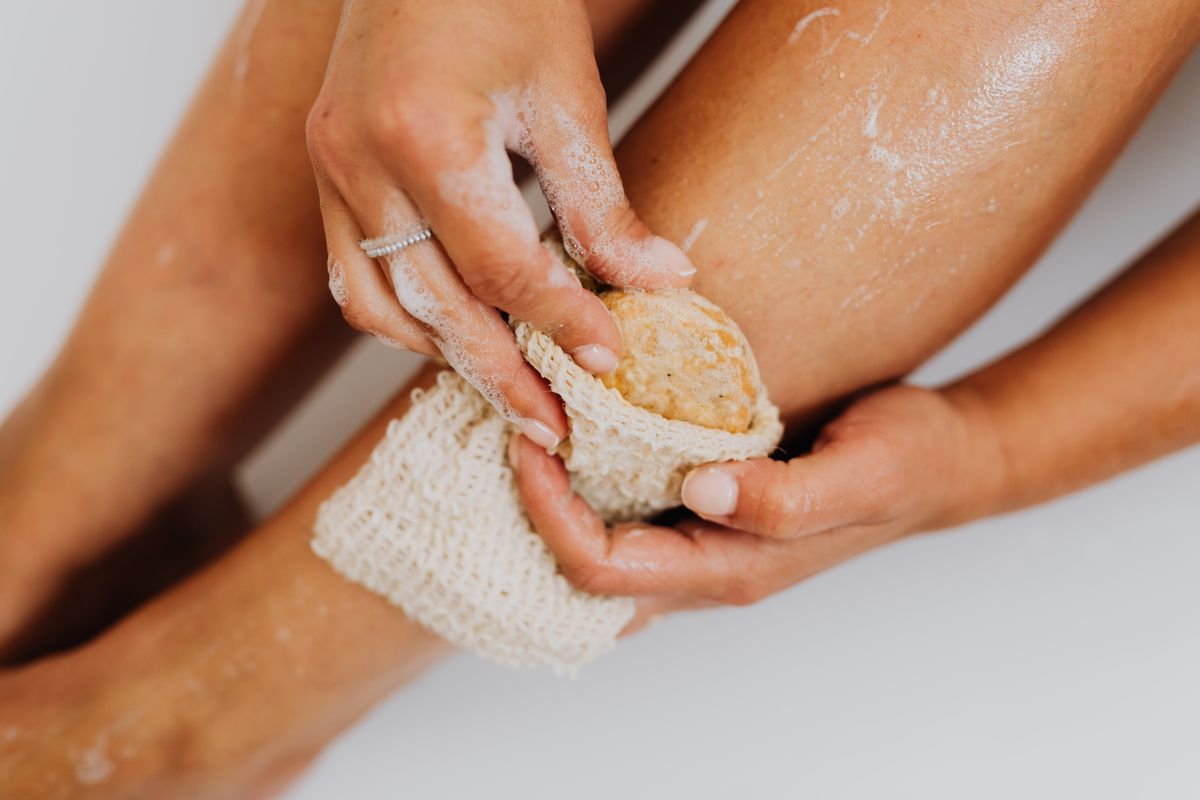
This is the single most important prep step. Spray tan solution binds to the outermost layer of dead skin cells. If that layer is uneven or about to shed naturally, your tan will be patchy and fade quickly. Exfoliating removes the top layer of dead skin so the tan develops on fresh, even skin that will last longer.
Focus on areas that tend to be drier and flakier:
- Elbows and knees
- Ankles and feet
- Hands and knuckles
- Any areas with rough or dry patches
Use a physical scrub or exfoliating mitt — chemical exfoliants like AHAs and BHAs work too, but physical exfoliation gives you more control over problem areas. Don't exfoliate on the same day as your tan. Your skin needs 24-48 hours to settle and for any micro-irritation to calm down.
Shave or wax at least 24 hours ahead
Hair removal can cause minor irritation. If you tan immediately after shaving or waxing, the solution can settle into hair follicles and create dark spots or an uneven finish. Give your skin at least 24 hours to recover.
If you're waxing, do it 48 hours before your tan if possible—waxing is more aggressive than shaving and needs extra recovery time. Avoid depilatories (like Nair) right before tanning as well, since they can leave a residue that interferes with tan development.
Avoid products that interfere with tan development
On the day of your spray tan, certain products can interfere with how the tanning solution develops. The main culprits are anything that alters your skin's pH or creates a barrier that prevents the tanning agent from making contact with your skin cells.
Products to avoid before your appointment:
- Deodorant and antiperspirant — these alter pH and can cause dark spots or uneven color in the underarm area
- Heavy moisturizers, body oils, and lotions — these create a barrier that blocks the tanning solution
- Perfume and body spray — alcohol and other ingredients can interfere with color development
- Makeup on areas being tanned — foundation, body makeup, or self-tanner residue will create uneven results
If you need to use deodorant earlier in the day, shower it off completely 1-2 hours before your appointment. Your goal is clean, product-free skin in the areas being tanned. You can still use your regular facial skincare if you're not tanning your face, but keep body products minimal and rinse everything off before application.
Shower and dry completely
Take a shower 1-2 hours before your appointment. Use a gentle, sulfate-free body wash — nothing moisturizing or oil-based. Wash your hair if needed, but don't apply conditioner to your body (it happens more than you'd think when rinsing).
Dry off completely. Any moisture left on your skin will dilute the tanning solution and cause streaking. Pay special attention to areas that hold water: between toes, behind knees, underarms, and any skin folds.
During application
If you're getting a professional spray tan, the technician will handle application. If you're doing it at home, work in sections and use long, sweeping motions. Either way, there are a few things that help protect your skin during the process:
- Apply a barrier cream to areas that absorb too much color: hands, feet, elbows, knees, and ankles. Most salons provide this, or you can use a light layer of moisturizer on just these spots.
- Use a nose filter if you're sensitive to the spray mist—inhaling the solution isn't typically harmful, but it can be irritating for some people.
- Keep your eyes closed during face application to avoid irritation.
- If you have sensitive skin or conditions like eczema or psoriasis, let your technician know. They may adjust the formula or avoid certain areas.
Immediately after your spray tan

The first few hours after your tan are critical. The tanning solution is still developing and binding to your skin. Anything that disrupts this process — water, sweat, friction — will ruin your results.
Wear loose, dark clothing
Tight clothing will rub against your skin and create friction lines in your tan. Loose, breathable fabrics (cotton or linen) are best. Dark colors hide any bronzer transfer — most spray tans include a cosmetic bronzer that washes off in your first shower, and it will stain light-colored clothing.
Avoid:
- Tight jeans or leggings
- Bras with underwire or tight bands (go wireless or skip it if possible)
- Socks and closed-toe shoes (flip-flops or sandals are better)
- Anything white or light-colored
Avoid water and sweat
Don't shower, swim, or do anything that makes you sweat for at least 8-12 hours after your tan (check your specific product's instructions—some rapid tans allow showering after 4-6 hours). Water will stop the development process and cause streaking.
This means:
- No workouts
- No hot environments (saunas, hot yoga, sitting in a hot car)
- No rain (check the weather before booking your appointment)
- No hand washing if you tanned your hands — use hand sanitizer if needed
If you accidentally get wet, blot the area gently with a towel. Don't rub.
Don't touch your skin
Resist the urge to touch, scratch, or rub your skin. Your hands will transfer the bronzer and create light spots. If you need to touch something, wash your hands immediately after (once the initial development period is over).
The first shower after tanning
Your first shower is when you'll rinse off the cosmetic bronzer and see your actual tan color. Use lukewarm water—hot water can be drying and may strip color faster. Don't use soap or body wash on your first rinse; just let the water run over your skin.
The water will turn brown as the bronzer rinses off. This is normal. Your actual tan will be lighter than the initial bronzer color, and it will continue to develop for another 12-24 hours after this shower.
Pat yourself dry with a towel. Don't rub. Once you're dry, apply a light, fragrance-free moisturizer to lock in hydration.
Maintaining your tan
A spray tan typically lasts 5-10 days depending on your skin type, how well you prep, and how you care for it afterward. Proper maintenance can push that closer to the 10-day mark and keep the fade even.
Moisturize daily

Dry skin sheds faster, which means your tan will fade faster. Moisturizing twice a day — morning and night — keeps your skin hydrated and extends the life of your tan. Use a fragrance-free, oil-free moisturizer. Some oils can break down the tan and cause premature fading.
Pay extra attention to areas that dry out quickly: elbows, knees, ankles, and hands. These are also the areas that tend to fade first.
Use gentle products
Switch to sulfate-free, gentle cleansers while your tan is active. Harsh soaps and body washes strip color faster. Avoid anything with exfoliating beads, scrubbing particles, or strong active ingredients like salicylic acid or benzoyl peroxide.
Avoid exfoliation and harsh treatments
No physical or chemical exfoliation while your tan is active. This includes:
- Body scrubs and exfoliating mitts
- Loofahs and rough washcloths
- AHA or BHA body treatments
- Dry brushing
- Shaving (if you must shave, use a fresh razor and be extremely gentle)
Also skip any professional treatments that involve exfoliation: facials, microdermabrasion, chemical peels, or waxing. These will strip your tan immediately.
Pat dry, don't rub
After every shower, pat your skin dry with a towel instead of rubbing. Rubbing creates friction that removes color unevenly. This is especially important in the first few days when your tan is still settling.
What to avoid while tanned
Certain activities and products will shorten the life of your spray tan or cause it to fade unevenly:
- Chlorine pools — chlorine is highly drying and will strip your tan fast. If you must swim, apply a waterproof barrier cream first and shower immediately after.
- Hot tubs and saunas — heat and prolonged water exposure both fade tans quickly.
- Long baths — soaking in water for extended periods will cause your tan to fade and potentially streak.
- Tight clothing and friction — anything that rubs against your skin repeatedly (like a backpack strap or tight waistband) will wear away color in those spots.
- Heavy sweating — if you work out, shower as soon as possible afterward and moisturize immediately.
When your tan starts fading
Spray tans don't fade all at once. They typically start to lighten around day 5-7 and may become patchy as certain areas (like elbows and knees) fade faster than others. Once you notice uneven fading, you have two options:
1. Let it fade completely and exfoliate it off. Use a body scrub or exfoliating mitt in the shower to speed up the process. Focus on areas where color is clinging (usually elbows, knees, and ankles).
2. Apply a gradual tanning lotion to even out the fade and extend the color for a few more days. This won't give you the same intensity as a fresh spray tan, but it can smooth out patchiness.
Once your tan is fully faded, exfoliate thoroughly before your next spray tan to start with a clean slate.
Keeping skin healthy long-term
If you spray tan regularly, your skin needs consistent care to stay healthy. The tanning solution itself isn't harmful, but the prep and maintenance routine can be drying if you're not careful.
Between tans:
- Maintain a regular moisturizing routine even when you're not tanned. Healthy, hydrated skin takes spray tan better and holds it longer.
- Use a gentle body wash year-round. Harsh cleansers damage your skin barrier over time, making it harder to maintain an even tan.
- Exfoliate 1-2 times per week (when you're not actively tanned) to keep skin smooth and prevent buildup.
- If you notice dryness, irritation, or sensitivity developing, take a break from tanning and focus on repairing your skin barrier with a simple routine: gentle cleanser, hydrating serum, and a rich moisturizer.
Spray tanning is one of the safest ways to get color without UV exposure, but like any cosmetic treatment, it works best when your skin is healthy to begin with.
Frequently asked questions
How long does a spray tan last?
Most spray tans last 5-10 days. The exact duration depends on your skin type, how well you prepped, and how you care for it afterward. Oily skin tends to fade faster, while dry skin holds color longer (but may fade unevenly if not moisturized).
Can I spray tan if I have sensitive skin?
Yes, but choose a formula designed for sensitive skin and do a patch test first. Avoid tanning over active breakouts, eczema flare-ups, or irritated skin. Let your technician know about any sensitivities so they can adjust the application or recommend a gentler formula.
Will spray tan clog my pores?
Most spray tan solutions are not comedogenic, but some formulas contain oils or other ingredients that can clog pores, especially on the face. If you're acne-prone, ask for a face-specific formula or skip tanning your face entirely. Always cleanse your face thoroughly after the initial development period.
Can I wear makeup after a spray tan?
Wait until after your first shower (8-12 hours post-tan) to apply makeup. Before that, makeup application will disrupt the tan development. Once your tan is set, you can wear makeup as usual, but use a gentle makeup remover to avoid stripping color from your face.
What if my tan turns out patchy?
If you notice patchiness after your first shower, you can try blending it with a gradual tanning lotion or self-tanner applied to the lighter areas. For significant patchiness, exfoliate the tan off completely and start over. Patchiness usually comes from inadequate exfoliation before tanning or moisture/product on the skin during application.
Is spray tanning safe during pregnancy?
Most spray tan solutions are generally considered safe for topical use during pregnancy, but there's limited research on inhalation of the mist. If you're pregnant, opt for a self-tanning lotion you apply yourself rather than a spray, or ensure the room is well-ventilated and use a nose filter during application. Always consult your doctor if you're unsure.